
AI Has Moved Beyond Chat — Welcome to the Age of Autonomous Agents
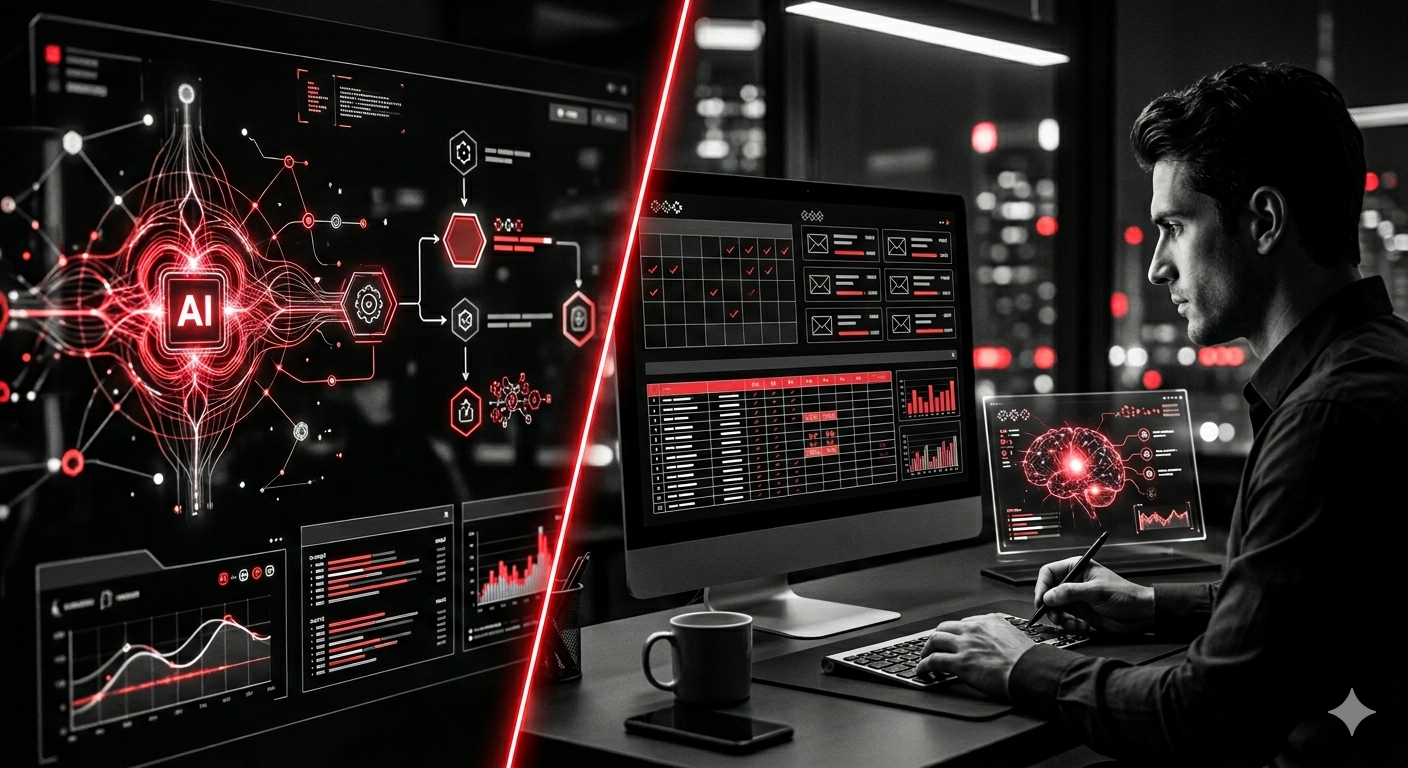
For the past few years, artificial intelligence has been impressive—but limited. It could answer questions, generate content, and assist with workflows. But it couldn’t act. That changed when Anthropic introduced a breakthrough capability for Claude on March 24, 2026: Computer Use. This isn’t just another feature update. It marks a fundamental shift in how AI interacts with the real world. Claude can now:
- Open and navigate desktop applications
- Click, type, and execute workflows
- Manage calendars and emails
- Operate browsers and business tools
All autonomously.
In one demo, a user running late for a meeting simply asked Claude to handle it. The AI opened the calendar, identified the conflict, drafted a rescheduling email, and sent it—without any manual input.
This is no longer an assistant.
This is an AI agent.
The Model Avalanche: Why AI Is Accelerating Faster Than Ever
Claude’s upgrade didn’t happen in isolation. Between March 10–16, the AI industry experienced what engineers are calling a “model avalanche.” In just one week, major players—including OpenAI, Google, xAI, Mistral AI, and Cursor—released 12 new AI models.Here’s what that acceleration looks like:
- Gemini 2.5 Pro now leads benchmark rankings, surpassing competitors in performance
- GPT-4.5 significantly reduced hallucination rates, improving reliability for production use
- Mistral Small 3.1 delivers competitive performance at dramatically lower cost
- Gemma 3 enables powerful local AI deployment without API dependency
The pattern is undeniable:
Capabilities are accelerating.
- Costs are collapsing.
- Competition is compressing.
From AI Tools to AI Agents: The Real Industry Shift
What’s happening now goes deeper than faster models or better benchmarks. The entire AI ecosystem is shifting from:
Answering questions → Executing tasks This is the rise of agentic AI systems. Alongside Claude’s Computer Use:- Perplexity AI introduced local “Personal Computer” agents
- Model Context Protocol (MCP) is emerging as a universal standard for connecting AI to real-world systems
- Major platforms are embedding agents directly into enterprise workflows
Why AI Infrastructure Is Now the Bottleneck
As AI capabilities explode, a new problem is emerging: Fragmentation. Businesses now face a complex landscape:
- Claude for autonomous computer control
- GPT models for reliability and reasoning
- Gemini for benchmark-leading performance
- Mistral for cost efficiency
- Grok integrated into social platforms
- Local agents running on private hardware
The challenge is no longer access to AI.
It’s integration.
Without the right infrastructure:
- Teams waste time switching between providers
- Costs become unpredictable
- Engineering complexity increases
- Innovation slows down
In other words:
The limiting factor is no longer AI capability.
It’s your ability to use it effectively.
Elodan: The Infrastructure Layer for the Agent Era
This is where Elodan enters. Elodan is designed to solve the fragmentation problem by acting as a unified AI infrastructure layer. Instead of managing multiple APIs and integrations, Elodan provides:
- A single interface connecting all major AI models
- Seamless switching between providers
- Optimized routing based on cost and performance
- Instant access to new capabilities as they launch
When new models are released, Elodan users don’t need to rebuild their stack.
They’re already connected.
When costs drop, they adapt instantly.
When agent capabilities evolve, they deploy faster.
What This Means for Developers, Founders, and Businesses
The message is clear: The AI tools are ready. The agent era has already started. The real question is: Can your infrastructure keep up? Companies that win in this next phase won’t be the ones using a single model. They’ll be the ones who can:- Integrate across multiple AI systems
- Deploy agents into real workflows
- Adapt instantly to rapid changes
